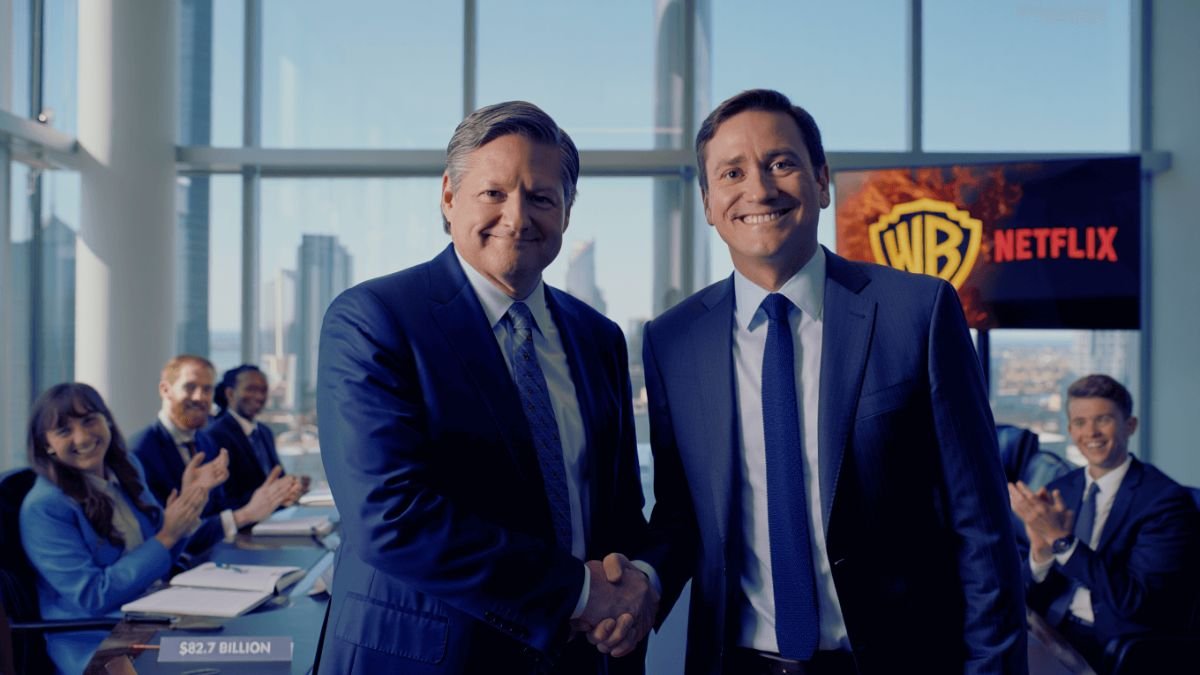
LOS ANGELES — In a seismic move that fundamentally alters the global entertainment industry, Netflix Inc. announced on Friday, December 5, 2025, that it has reached a definitive agreement to acquire the film and television studios of Warner Bros. Discovery (WBD), along with its HBO and HBO Max streaming businesses. The cash-and-stock transaction places an enterprise value of approximately $82.7 billion on the assets, marking the largest media consolidation in over a decade.
The deal, which follows a fierce weeks-long bidding war against rivals Comcast and Paramount Skydance, represents a decisive victory for the streaming giant. By securing the century-old Warner Bros. studio, Netflix gains control over some of Hollywood’s most valuable intellectual property, including the Harry Potter franchise, the DC Universe, Game of Thrones, and a library of classics ranging from Casablanca to Friends.
Deal Structure and Spinoffs
Under the terms of the agreement, Warner Bros. Discovery shareholders will receive $27.75 per share, comprised of $23.25 in cash and $4.50 in Netflix stock. The acquisition is structured to take effect only after WBD completes a strategic spinoff of its linear television assets.
WBD’s cable networks—including CNN, TNT Sports, and the Discovery channels—will not be absorbed by Netflix. Instead, they will be separated into a new, standalone publicly traded company tentatively named “Discovery Global.” This spinoff is expected to conclude by the third quarter of 2026, with the Netflix acquisition closing shortly thereafter, pending regulatory approval.
Executive Reactions
“Our mission has always been to entertain the world,” said Ted Sarandos, co-CEO of Netflix, in a joint statement. “By combining Warner Bros.’ incredible library of shows and movies with our culture-defining titles like Stranger Things and Squid Game, we will be able to do that even better. Together, we can give audiences more of what they love and help define the next century of storytelling.”
David Zaslav, President and CEO of Warner Bros. Discovery, framed the sale as a necessary evolution for the historic studio. “This agreement ensures that the world’s most resonant stories will continue to reach people everywhere for generations to come,” Zaslav said.
Strategic Implications
For Netflix, which has long relied on building its own production pipeline from scratch, the acquisition provides an instant, deep reservoir of “heritage” content—a critical asset in retaining subscribers in a saturated market. The integration of HBO Max into Netflix’s ecosystem is expected to create an unrivaled streaming colossus, potentially putting immense pressure on competitors like Disney+ and Amazon Prime Video.
Analysts note that the move signals the final stage of Silicon Valley’s conquest of traditional Hollywood. “Netflix has effectively bought the castle,” said one media analyst. “They are no longer just the disruptor; they are now the establishment.”
Regulatory Hurdles Ahead
The deal is expected to face intense scrutiny from antitrust regulators in Washington and Brussels. Lawmakers and industry guilds have already voiced concerns about the consolidation of power. Senator Elizabeth Warren (D-Mass.) criticized the merger as an “anti-monopoly nightmare” that could reduce consumer choice and harm creative workers.
To assuage concerns, Netflix has reportedly agreed to a massive $5.8 billion breakup fee should the deal be blocked by regulators. Additionally, the company has pledged to honor existing contracts for theatrical releases, aiming to calm fears among theater owners that the acquisition would signal the end of the box office era.
The Screen Actors Guild and Writers Guild of America have both issued statements cautioning that they will closely monitor the merger’s impact on employment and creative rights.
Market Reaction
Following the announcement, shares of Warner Bros. Discovery surged over 3% in after-hours trading, while Netflix shares saw a slight dip as investors digested the sheer scale of the financial commitment.
As the industry braces for a regulatory showdown, the immediate takeaway is clear: the “Streaming Wars” have entered a new, and perhaps final, phase.